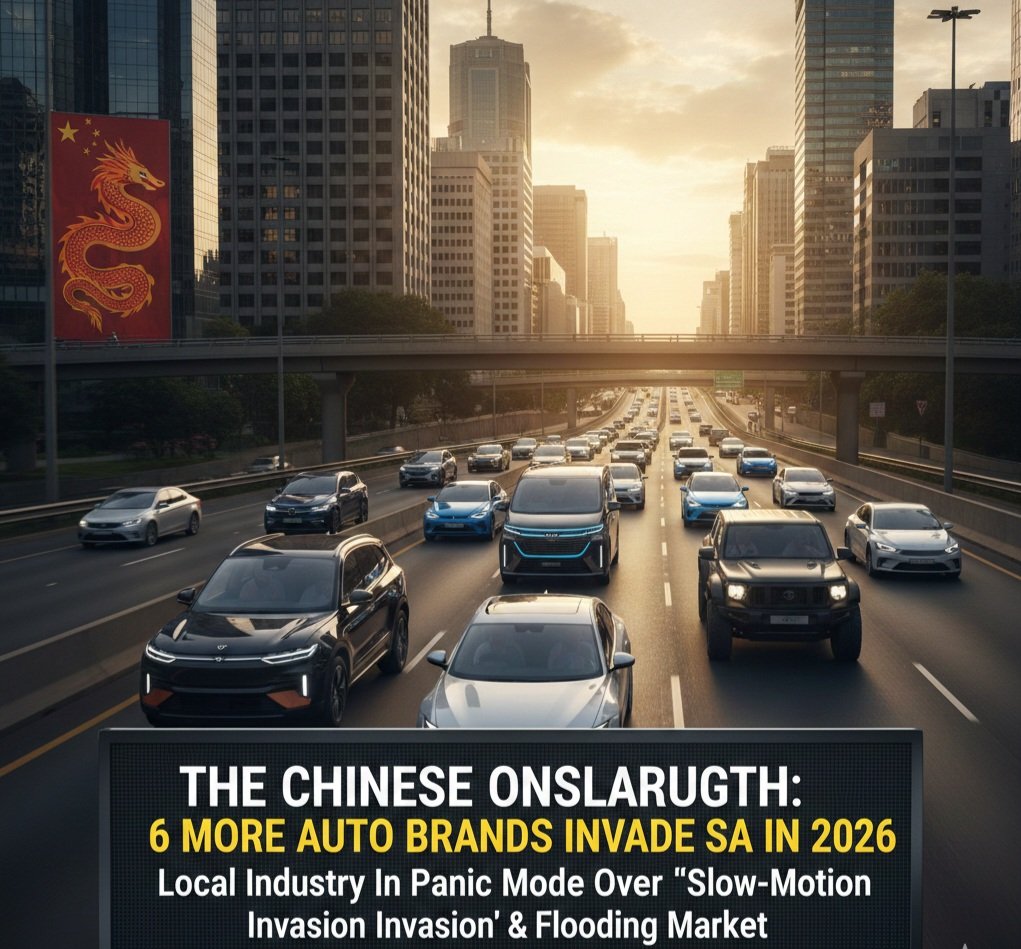
JOHANNESBURG – The South African automotive landscape is currently the site of a high-stakes “turf war.” While traditional giants like Toyota and Volkswagen have spent decades building their empires, 2026 marks the arrival of six more Chinese vehicle brands, sparking a heated debate: Is this a consumer victory for affordability, or a fatal blow to local industry?
The “Great Wall” of New Arrivals
With brands like Chery and GWM already firmly in the Top 10, the new wave arriving this year is nothing short of aggressive. The 2026 roster includes:
iCaur: The “funky” electric brand from Chery, targeting the youth with modular designs.
Leapmotor: Backed by the global giant Stellantis, bringing “smart” EVs to the masses.
Denza: BYD’s luxury weapon, aiming directly at the Mercedes and BMW elite.
Deepal: Changan’s premium electric wing, set to redefine high-tech interiors.
Lepas & Riddara: New players entering the cutthroat SUV and electric bakkie segments.
The Controversy: “Cannibalization” and Value
The industry is divided. While buyers celebrate R300,000 price tags for tech-heavy cars, industry veterans are sounding the alarm. Mazda Southern Africa’s incoming CEO, Bonite van der Merwe, recently warned of “cannibalization,” suggesting the market is being flooded with too many similar models, which could weaken all brands involved.
The most explosive debate, however, surrounds Resale Value.
”The real test isn’t the showroom shine; it’s the used-car lot in five years,” warns Faan van der Walt, CEO of WeBuyCars.
There are growing fears that South Africa is becoming a “dumping ground” for China’s overproduction of internal combustion engines that can no longer be sold in Beijing or Shanghai due to strict green laws.
Government Under Pressure
Local manufacturers (OEMs) are not sitting idle. Pressure is mounting on the South African government to protect the “Big Seven” local producers. Talk of higher import tariffs on Chinese vehicles is intensifying, as traditional brands argue that Chinese firms benefit from massive state subsidies back home, creating an “unlevel playing field.”
The Verdict: Choice vs. Survival
For the average South African struggling with the cost of living, a “cool” SUV at half the price of a German equivalent is hard to resist. But as the 2026 “Chinese Onslaught” accelerates, the question remains: When the dust settles, how many of these brands will actually have a service center still open in 2030!.
THE CHINESE ONSLAUGHT: Is South Africa’s Auto Industry Facing a “Slow-Motion Invasion” in 2026?

Byfrenkxerinda@gmail.com
Jan 3, 2026