
BusinessTech logo
5 Things
End of the line for major social grant, and good news for electricity tariffs in South Africa
Staff Writer
·7 Jan 2026
South Africa’s rand softened on Tuesday after an S&P Global survey showed that the country’s business activity contracted sharply in December.
However, even softer, the currency was still trading around its strongest level in more than three years.
The Purchasing Managers’ Index declined to 47.7 in December from 49.0 in November, as demand waned and firms reduced their purchases and inventories.
The rand closed the day at around R16.37 against the dollar, muted compared to Monday’s close, but hovering around its strongest since August 2022.
The dollar edged up against a basket of currencies, with Wall Street also gaining, as healthcare and technology stocks helped drive the rise, ahead of Friday’s non-farm payroll report.
The report will be scrutinised for US monetary policy cues. Investors currently expect at least two US rate cuts this year.
Minneapolis Fed President Neel Kashkari said on Monday that inflation was slowly easing, but there was a risk the jobless rate could “pop” higher, increasing the likelihood of a rate cut.
Adam Phillips, a treasury specialist at Umkhulu Treasury, stated in a research note that Kashkari’s comments were perceived as dovish by market operators.
Services and composite PMIs for December, being released in all major economies, could provide a more accurate indicator of the direction of monetary policy.
Locally, economists expect South Africa’s rate-cutting cycle to continue this year, with at least 50 basis points of cuts in 2026 and more in 2027.
On Wednesday, the rand is trading at R16.35 to the US dollar, R22.08 to the pound and R19.11 to the euro.
Gold is trading at $4,465.44 and ounce, while oil has moved below the $60 mark, trading at $59.95 a barrel.
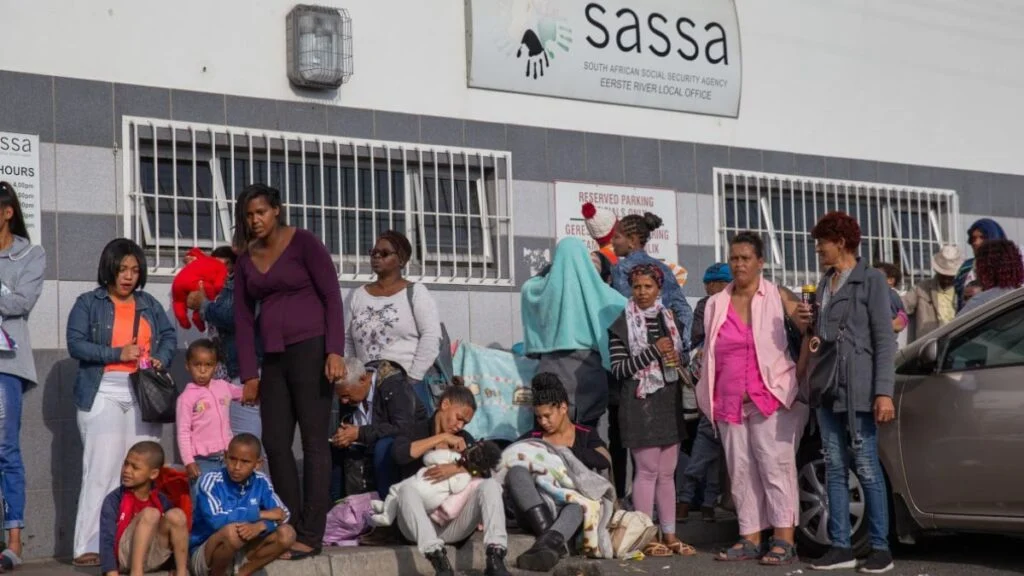
End of the SRD grant: National Treasury says the future of the R370 SRD grant in South Africa is uncertain, with no word on whether it will be extended beyond March 2027. The grant, introduced as a stopgap measure during the COVID pandemic and lockdowns, has been renewed well beyond its intended lifetime. It costs the state approximately R40 billion per year to maintain it. The government has stated that it was always intended to be a temporary grant and plans to replace it with something similar to a workseeker’s grant; however, no timelines or certainties have been attached. [GroundUp]
Eskom shifting: Eskom has shifted its focus to reducing the cost of its electricity production now that South Africa’s electricity system is stable. This is according to Eskom senior manager Eric Shunmugam, who said that the power utility had recovered nearly 7,500MW or 7.5GW of generating capacity since the winter of 2024. He explained that, now that Eskom has kept load shedding at bay for over 325 days, the focus is shifting to addressing costs and producing cheaper electricity. Energy Minister Kgosientsho Ramokgopa is also reviewing South Africa’s electricity pricing policy, which he plans to finalise by March 2026. [MyBroadband]
New prosecution boss: President Cyril Ramaphosa has appointed the Special Investigating Unit (SIU) head Andy Mothibi as South Africa’s new National Director of Public Prosecutions. The surprise move comes after all six current and former prosecution bosses who were interviewed for the position were rejected by the panel assessing them. Mothibi was described as a frontrunner for the position, but did not apply. His last-minute appointment has raised eyebrows over procedural issues. Nevertheless, Mothibi’s tenure at the SIU has garnered commendations, instilling hope that the NPA will follow suit. [News24]
Government hoarding land: Although there have been numerous promises and policy statements to empower Black farmers to own land, the South African government is holding onto roughly 2.5 million hectares of land. The failure to release this land adds to the ongoing frustration over the minimal contribution of black farmers to commercial agricultural output. These views were presented by Wandile Sihlobo, chief economist of the Agricultural Business Chamber of South Africa (Agbiz) and a member of President Cyril Ramaphosa’s Economic Advisory Council. [Newsday]
Joburg falling apart: Johannesburg’s deteriorating water infrastructure, managed by Joburg Water, is exaggerating the impact of maintenance from Rand Water on the city’s water supply. This is because Joburg Water has failed to do the required maintenance on municipal infrastructure, resulting in leakages at its reservoirs and an inability to get water from the bulk supplier to the end user efficiently. The pending collapse of the city’s water infrastructure is symbolic of its wider decline, with the country’s economic hub increasingly showing signs of decay. [Daily Investor]